
Sex Offender Checks in Chesapeake
The Virginia Sex Offender and Crimes Against Minors Registry is the official public source for Chesapeake registry searches. Virginia State Police manages the Chesapeake registry data under the Sex Offender and Crimes Against Minors Registry Act. Chesapeake Police and the Chesapeake Sheriff perform local law-enforcement functions, but research did not establish a separate official local public registry or sheriff map. Begin with the statewide VSP system and filter to Chesapeake as an independent city.
A name, SOR number, full Chesapeake address, or ZIP code can help. Use the county or independent-city control when the goal is a Chesapeake citywide list. For nearby-location awareness, the Chesapeake neighborhood map supports a radius. Results can change as VSP receives updates, and the public system may withhold protected information. Confirm an apparent Chesapeake error or a safety-critical point with the VSP Registry Unit rather than drawing a public conclusion from one screen.
The official VSP registry search interface shows the live Chesapeake sex offender search choices.
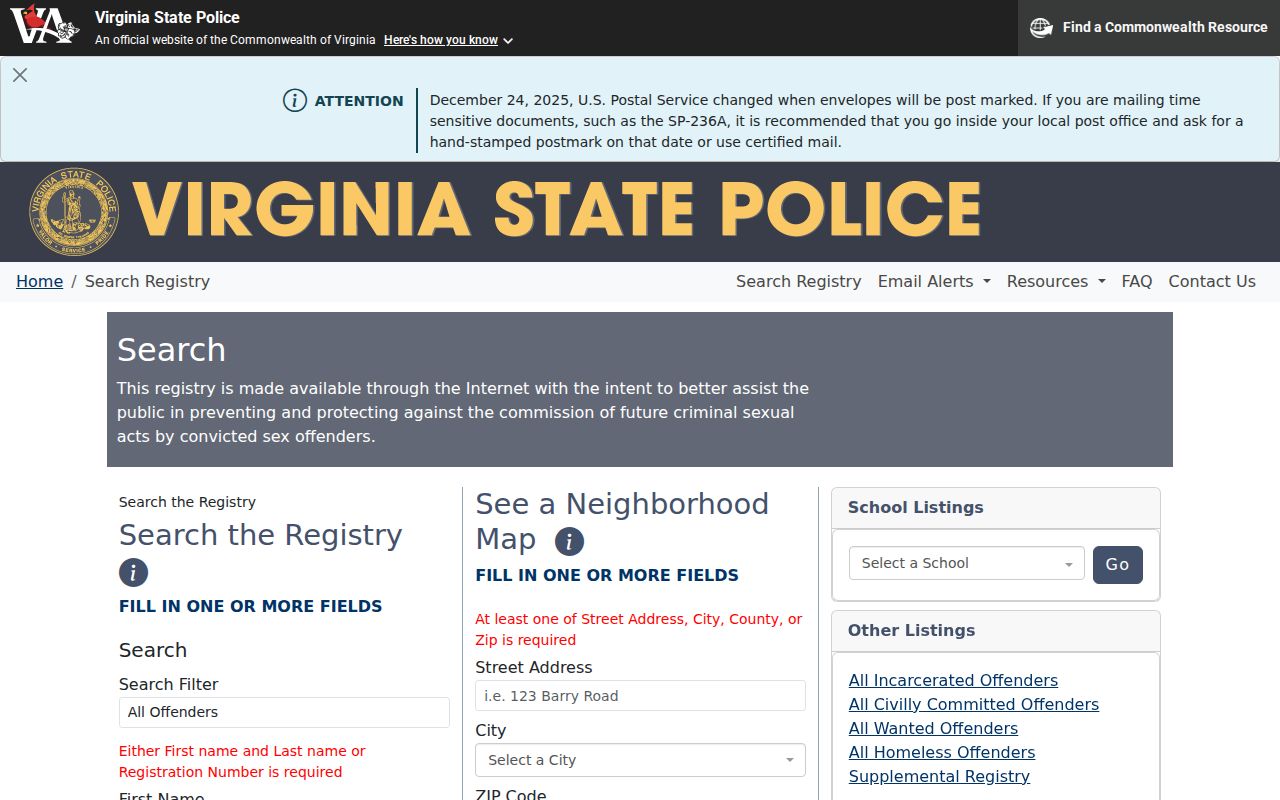
The image reflects the authoritative Virginia public interface and its location-based paths, not a private listing service.
Chesapeake Registry Map Gaps
No marker near a Chesapeake address is not an all-clear. A map is only one view of the Chesapeake registry data. Spelling variants, an incomplete location, the selected radius, protected details, a recent status change, or a registrant listed as incarcerated, homeless, wanted, or pending out of state can affect what appears. Chesapeake covers a large and varied area, so a narrow map view may exclude nearby parts of Chesapeake or adjacent jurisdictions.
Run a Chesapeake geographic list search as well as a neighborhood map. Try the Chesapeake independent-city field, the ZIP code, and the relevant street address. Then check category links such as All Incarcerated Offenders, All Wanted Offenders, All Homeless Offenders, and the Supplemental Registry when those paths fit the safety question. Chesapeake search results support awareness, but they do not predict conduct or replace a call to 911 when danger is immediate.
How to Search the Virginia Registry
The registry offers Chesapeake name or SOR-number searches, geographic lists, a neighborhood map, school listings, and category pages. A Chesapeake geographic list needs at least one of address, city, county or independent city, or ZIP code. The neighborhood tool can combine a Chesapeake address with city, ZIP, county-equivalent, and radius. VSP materials describe radius choices from 0.25 to 5 miles. Because controls can change, rely on the live labels.
- Open the VSP registry and select the name, list, neighborhood, school, or category search that fits the question.
- Enter a name or SOR number, or choose Chesapeake in the county or independent-city field with any useful address or ZIP details.
- Review the result list and compare the photo, registration number, status, location, and other public facts.
- Open the full profile, note its update and verification details, and use VSP contact or tip tools for a supported concern.
| Field Label | Type | Required | Notes |
|---|---|---|---|
| Search Mode | Tab or choice | Yes | Name/SOR, geographic list, map, school, or category |
| Street Address | Text | Conditional | Useful for a list or neighborhood search |
| City | Dropdown | No | Blank does not narrow the result to Chesapeake |
| County/Independent City | Dropdown | No | Choose Chesapeake for the local filter |
| ZIP Code | Text | Conditional | Can pair with contiguous-ZIP expansion |
| Radius | Dropdown | Conditional | Used for neighborhood mapping |
| First/Last Name | Text | Conditional | Spelling and aliases matter |
| SOR Number | Text | Conditional | Direct registration identifier |
Note: Search both Chesapeake and the relevant ZIP when a boundary or nearby jurisdiction could affect the result set.
Chesapeake Registry Versus NSOPW
The VSP registry is the source of record for Chesapeake and other Virginia public listings. The U.S. Department of Justice National Sex Offender Public Website, or NSOPW, is a multi-jurisdiction supplement. It is useful when a Chesapeake search crosses the city line, Virginia's border, or a person's prior locations. It does not replace the Chesapeake state source that supplies Virginia data and explains Virginia-specific tiers, status, and use rules.
The official NSOPW search page provides that nationwide layer for a Chesapeake registry inquiry.
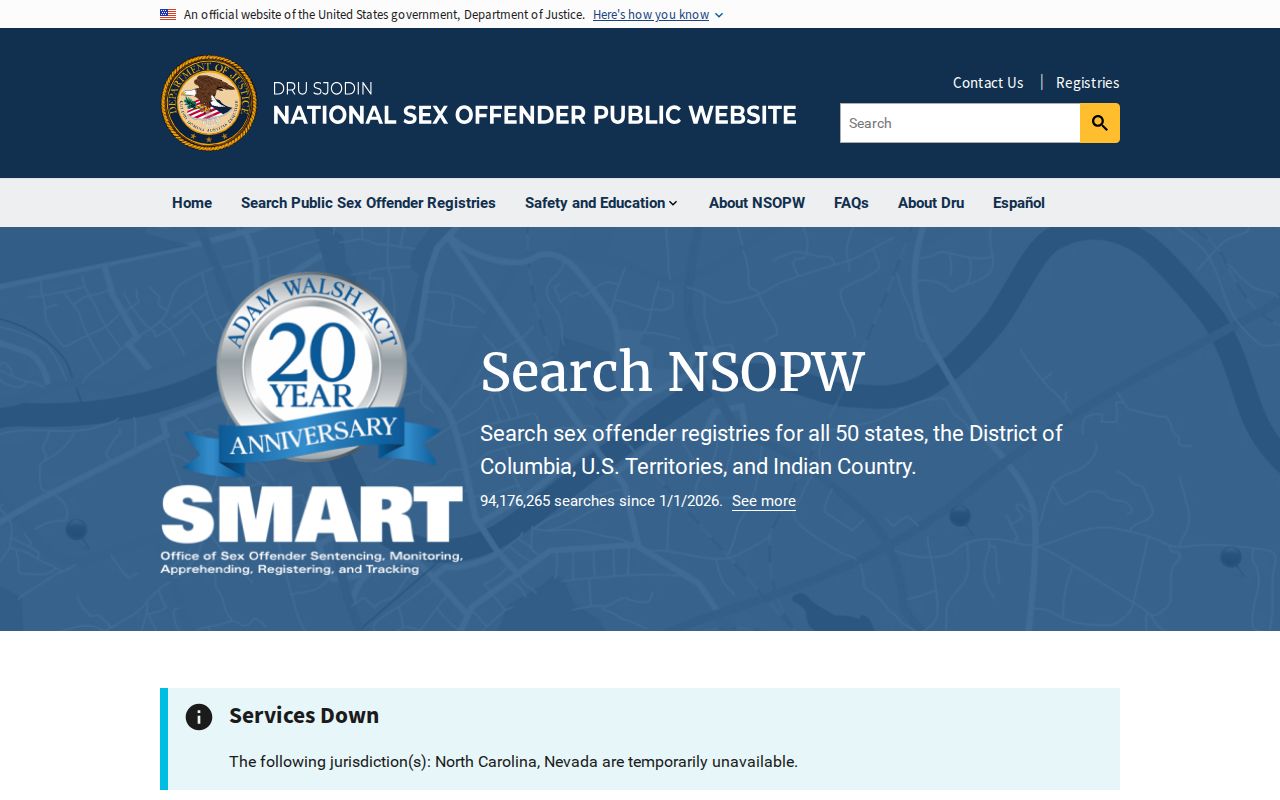
Use the national result to identify a contributing jurisdiction, then return to that jurisdiction's official profile for the most direct source and contact path.
Inside a Registry Profile
An anonymized review of public Virginia profiles found a portrait and photo date, registration number, status, age, tier, lifetime-registration flag, renewal date, and initial registration date. Chesapeake profile fields included sex, race, hair, eyes, height, and weight. Chesapeake profiles could show primary and work addresses, aliases, and offense entries with a code or description, conviction date and state, court, case number, and broad victim-age category. Public actions included Track Offender, Map Offender, Submit a Tip, and Print.
| Name & Aliases | The displayed registered name and any aliases, or a statement that none were found. |
|---|---|
| Photo & Description | A portrait with photo date and listed physical traits. |
| Registered Addresses | Primary and work locations when public; some profiles show no work location or more than one. |
| Offense & Court | Offense code or text, conviction date and state, court, case number, and victim-age category. |
| Tier & Duration | The offense-based Virginia tier and whether lifetime registration applies. |
| Registration Status | Examples include Active, Incarcerated, and Pending Out of State, plus renewal and start dates. |
Inspected Chesapeake profiles did not display an exact date of birth, victim identity, supervising officer, SID or FBI number, school, vehicles, or a numerical risk score. A Chesapeake tier is a legal offense category. It is not a forecast labeled low, medium, or high risk.
Chesapeake Registry Versus Criminal History
A registry profile and a Chesapeake criminal history answer different questions. The registry shows public facts tied to a current statutory registration duty. A court file documents one prosecution. A VSP SP-167 name check is a mailed Virginia conviction search. A Chesapeake Sheriff booking record describes local custody. None should be substituted for another, even when they concern the same event.
The Chesapeake Sheriff Booking and Inmate Records page demonstrates the separate local custody channel assigned to the registry research set.
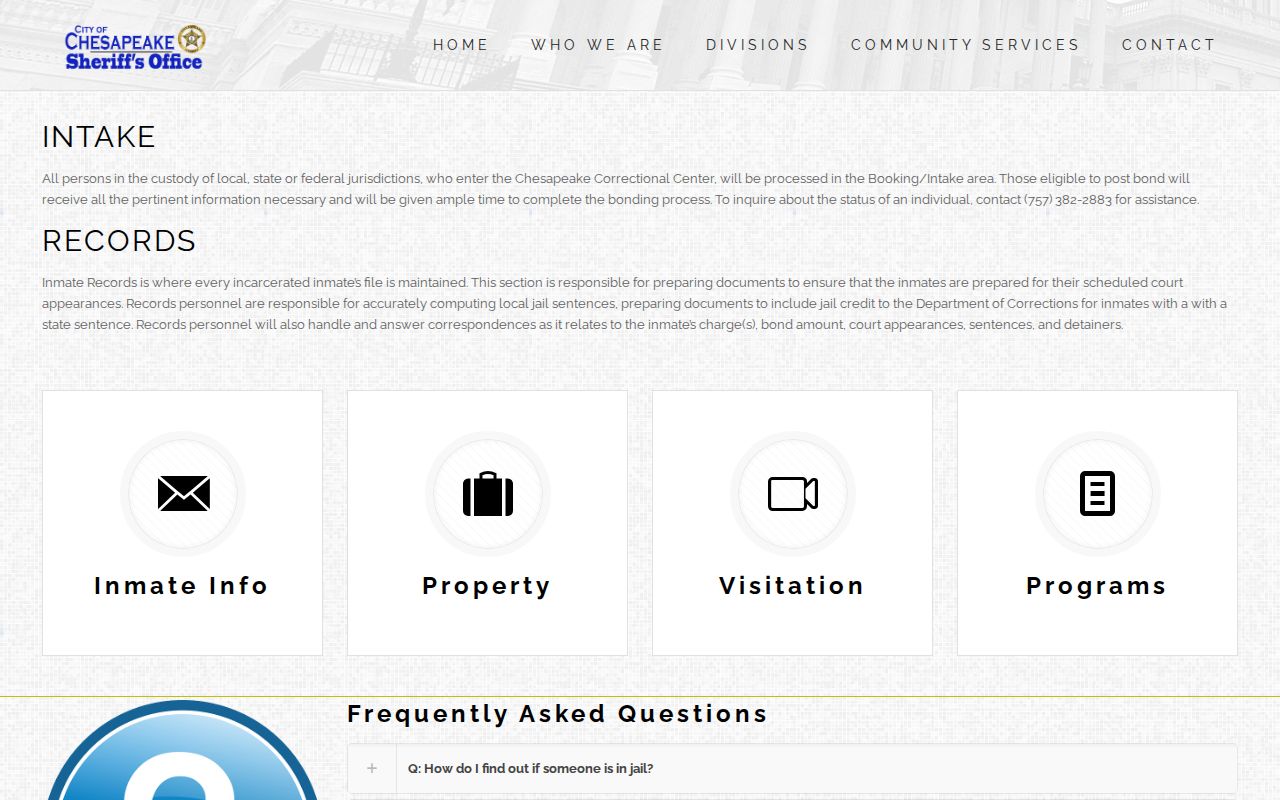
That Sheriff material can explain booking, bond, or custody paperwork, but it is not a Chesapeake sex offender list. For the wider source map, consult the Chesapeake criminal history resource.
Virginia Registration Levels and Requirements
Virginia uses offense-based Tier I, II, and III categories for Chesapeake and all other localities under Code §9.1-902. Current law generally calls for Chesapeake Tier I and Tier II verification once each year in the birth month. Tier III and listed murder or former §18.2-67.2:1 categories verify quarterly at three-month intervals, including the birth month. A failure-to-register conviction can increase the Chesapeake schedule. Virginia's 2025 legislation changed verification rules, so old claims that broadly assign twice-yearly checks may be stale.
| Tier | Duration or Removal Framework | Ordinary Verification |
|---|---|---|
| Tier I | An eligible single-offense person may petition no earlier than 15 years from the later statutory start point, subject to all conditions and a court finding. | Yearly in birth month |
| Tier II | An eligible single-offense person may petition no earlier than 25 years under the statutory conditions. | Yearly in birth month |
| Tier III and listed categories | Lifetime duty with no ordinary removal under §9.1-910. | Quarterly at three-month intervals |
The 15-year and 25-year marks are earliest petition dates, not automatic expiration dates. Treatment, counseling, restitution, offense history, and public-safety findings can matter. Current Chapter 9 of Title 9.1 controls over summaries.
Chesapeake Registry Verification Changes
Initial Chesapeake registration requires the information set by Virginia law and government photo identification that establishes full name, gender, date of birth, and complete physical address. State regulation describes the SP-236 form, clear ten-print and palm-print cards, and a photograph. Chesapeake reregistration uses a distinct form and thumbprints, while an address change returns to the required change process. These are law-enforcement reporting duties, not steps in the public search.
A qualifying failure-to-register conviction can raise Tier I or II verification to twice yearly and Tier III or a listed murder category to monthly. Failure to register under Code §18.2-472.1 can be a Class 1 misdemeanor or Class 6 felony depending on classification and history. A profile's dates and status should be read against current law, not a generic national schedule.
Correcting Chesapeake Registry Information
If a Chesapeake registry profile appears inaccurate, preserve the registration number, the disputed field, and the date viewed. Contact the VSP Registry Unit at 804-674-2825 or sor@vsp.virginia.gov. Use the profile's Submit a Tip feature when it fits the concern. Do not post accusations or attempt to investigate a listed address. For immediate danger, call 911; profile accuracy questions belong with VSP.
The Chesapeake public product can omit protected facts, and an address or status can change. A Chesapeake registration record also may identify incarceration or out-of-state status rather than a current home. State Police can route the issue to the source or local agency. The Chesapeake searcher should describe the discrepancy and source, not state an unverified claim as fact.
Community Notification and Lawful Use
Virginia publishes registry information for community awareness and safety planning. Code §9.1-913 defines public information and search mechanisms. Track Offender and any email or ZIP notification option should be used only through a form VSP currently authorizes. Ordinary safety steps still matter. A registry entry does not predict future conduct, and a missing entry does not guarantee that no risk exists.
The official text of Code §9.1-913 explains the Virginia public registry framework.
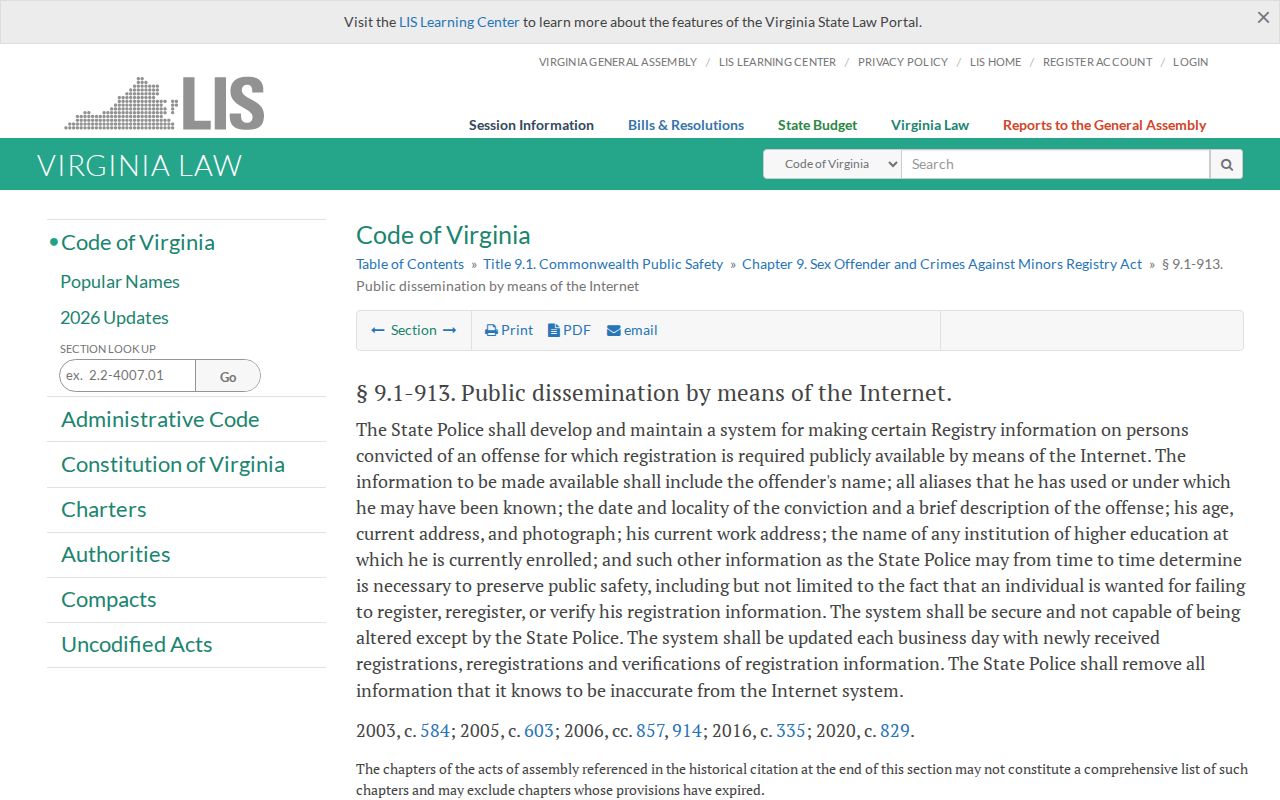
That law sets the public-access basis, while separate provisions restrict how a Chesapeake registry result may be used.
Registry misuse is a crime: Code §9.1-918 prohibits unauthorized use, intimidation, and harassment. A willful violation is a Class 1 misdemeanor.
Reasonable distribution by itself is not harassment without aggravating circumstances, but a public listing never grants permission for threats, vigilantism, or unwanted contact. Use official reporting channels for noncompliance concerns.