
Checking Criminal History in Chesapeake
Begin at city altitude. A reported incident belongs with Chesapeake Police Central Records. A live local booking belongs with the Chesapeake Sheriff. An adult misdemeanor or felony preliminary matter generally begins in General District Court, while an indicted felony or appealed misdemeanor belongs in Circuit Court. Juvenile and specified family-related files go through Juvenile and Domestic Relations District Court, where public internet access is restricted.
- Use CPD Citizen Connect only for selected reported-incident context, not as a name-based history or proof of guilt.
- Ask CPD Central Records for the police report, giving the report number, date, location, record type, and desired format when known.
- Search Chesapeake General District or Circuit Court by name or case number, based on the case level and stage.
- Use the Sheriff’s New World Inmate Inquiry for current or recent local custody, then match any booking to the court case.
- Use the Virginia State Police SP-167 process only when a name-based Virginia conviction response is the actual goal.
Online entries are indexes and status aids. A signed order, certified judgment, older file, or nonpublic item must come from its original office. Common names should be matched with a case number, booking number, date, court, or other lawful identifier.
Chesapeake City Records Explained
The Census Bureau treats Chesapeake as a county-equivalent with FIPS code 51550. It is an independent city with no incorporated cities beneath it. That legal geography explains why a city government, constitutional Sheriff, Commonwealth’s Attorney, and Virginia trial courts all operate within one local jurisdiction. It also means that a searcher should select Chesapeake as the locality or independent city in state systems rather than look for a separate county.
Chesapeake was created on January 2, 1963, when independent South Norfolk and Norfolk County consolidated. The result spans more than 338 square miles and includes Great Bridge, South Norfolk, Deep Creek, Western Branch, Greenbrier, Hickory, Fentress, and rural or swampland areas near the Great Dismal Swamp. Dates, exact addresses, police beats, and court identifiers matter because two incidents labeled Chesapeake may have occurred far apart.
Chesapeake Police Department Records
CPD Central Records at 304 Albemarle Drive is the local custodian for police incident and arrest reports. The unit can be reached at 757-382-6387. It requires picture identification for each transaction and accepts cash, check, credit card, or money order payable to the City of Chesapeake. Its products include local record checks, accident reports, and offense reports. Some files or portions require a VFOIA request or subpoena because an incident narrative is not automatically open in full.
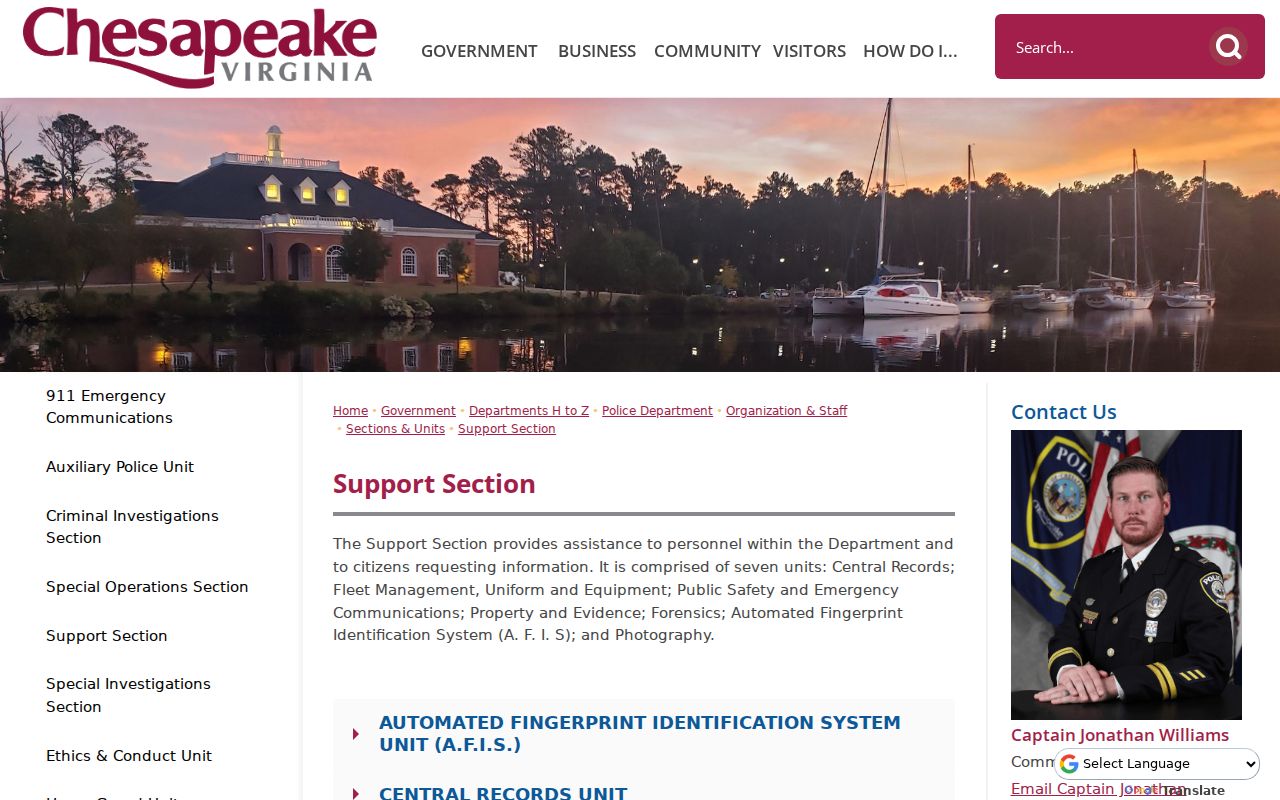
The city’s CPD Support Section profile identifies Central Records alongside VCIN, fingerprints, property and evidence, forensics, police photography, and body-camera management.
That range shows why a request for one report differs from a broad request spanning video, evidence, dispatch material, and investigative files. Narrow time ranges and clear record labels can reduce search and redaction work.
Chesapeake Records Near Albemarle Drive
Several major record offices cluster around the Great Bridge municipal center, yet each has its own counter. CPD Central Records is at 304 Albemarle Drive. The Circuit Court Clerk is at 307 Albemarle Drive, Suite 300A, with public office hours from 8:30 a.m. to 3:45 p.m. and phone 757-382-3000. The Sheriff’s Correctional Center is at 400 Albemarle Drive, while the Sheriff’s administrative office is at 401 Albemarle Drive.
Physical closeness does not merge custody. A police report should not be requested from the Circuit clerk. A certified judgment should not be requested from CPD. Jail staff handle current custody, bonds, court paperwork, local sentence calculations, and detainers, while court clerks hold filed pleadings and orders. City administration at 306 Cedar Road can route general city matters, but it is not a substitute for the record-holding office.
Note: Verify courthouse screening, device rules, access needs, and current counter hours before traveling to any Chesapeake records office.
Chesapeake Arrests and Bookings
CPD does not operate a separate public city holding database. A person taken into local custody is processed through the Chesapeake Sheriff’s correctional system. The official New World Inmate Inquiry can search by name, Subject Number, Booking Number, custody status, booking date range, and facility. Its records may show charges, bond, court rows, arresting agency, and booking origin. Because the system changes quickly, the Sheriff warns that it may not show the true current location, status, or release date.
An arrest record is an accusation and custody event, not an adjudication. Booking date may differ from offense date. Bond is a release condition, not punishment. A release says nothing by itself about whether charges were filed or dismissed. The detailed Chesapeake arrest lookup process follows a booking through police, Sheriff, court, state, and federal channels without treating the roster as a full history.
Chesapeake Crime Map Record Limits
Citizen Connect publishes selected crime reports and mapping information from cases reported through CPD. The city states that data changes daily and can lag while reports are reviewed and approved. A map item is therefore a report-context tool. It is not a person search, a booking roster, a full incident narrative, or evidence that any named person committed an offense.
Chesapeake’s wide geography makes the map useful when a reader has a date range, street, area, or incident category. It can help distinguish events in Greenbrier, Great Bridge, Deep Creek, South Norfolk, Western Branch, or other communities. Annual crime comparisons should instead use a fixed CPD annual report with its year stated. The live map can change after a screenshot or count is taken.
Municipal Court Records in Chesapeake
Chesapeake has no separate municipal court. Virginia’s state trial courts perform the local court work. General District Court finally hears misdemeanors and traffic matters and conducts felony preliminary hearings. Circuit Court hears felony trials, grand-jury indictments, and misdemeanor appeals. J&DR Court handles juvenile delinquency and specified family or adult matters under stronger confidentiality rules. Promising a Chesapeake municipal-court portal would invent a court that does not exist.
| Court Name | Chesapeake General District, Circuit, or Juvenile and Domestic Relations District Court, based on subject and stage. |
|---|---|
| Case Types Heard | Misdemeanors, traffic, felony preliminary matters, felony trials, appeals, juvenile cases, and specified family or adult jurisdiction. |
| Case Lookup Channel | Virginia Judiciary General District or Chesapeake Circuit systems; contact the J&DR clerk for permitted access. |
| What the Docket Shows | Case number, status, charges, hearing events, disposition, and sentence fields where public and entered. |
| Copies & Fees | The Circuit clerk lists $0.50 per page and $2 for certification; ask the correct clerk about other copies or searches. |
A felony can have one General District number during its preliminary stage and another Circuit number after indictment or certification. An appealed misdemeanor also creates a Circuit file. Search both levels when the procedural history suggests a transfer.
Reading Chesapeake Criminal Court Status
Short docket labels can mislead. “Pending” means unresolved, not guilty. “Nolle prosequi” means the prosecution discontinued that charge, but it does not automatically erase the arrest. “Dismissed” records a court outcome, yet police and booking files may remain until a qualifying expungement or sealing process changes access. “Appealed” may point to a new Circuit record. A “capias” is court process for arrest or appearance and should be confirmed safely with the clerk or law enforcement.
- Arraignment
- A hearing at which the charge and rights are addressed and later scheduling may be set.
- Disposition
- The recorded outcome of a charge, such as conviction, dismissal, acquittal, or nolle prosequi.
- Certified copy
- A clerk-authenticated copy used when proof of the official court record is needed.
- Capias
- Court-issued process connected to arrest or required appearance; confirm it through an official office.
Online case information may omit a pleading or signed order. The Chesapeake criminal court cases resource explains how the General District and Circuit paths differ and when the clerk’s source file is needed.
Where Chesapeake Records Go
Local records move by function rather than into one master city file. CPD makes an incident or arrest report. The Sheriff adds booking and custody data for a custodial arrest. The proper court receives the charge and later enters hearings and disposition. Clerks report covered dispositions to the Virginia State Police Central Criminal Records Exchange under state law. Each hand-off can occur on a different schedule.
Record flow: Chesapeake Police Department › Chesapeake Sheriff › Virginia trial courts › Virginia State Police CCRE
The Virginia State Police SP-167 product is a mailed, notarized name-based conviction search. It is not an instant portal and generally does not answer every arrest question. Its own response language warns that no Virginia conviction data does not rule out an arrest record. For a fresh event, local police, Sheriff, and court sources remain the better starting points.
Chesapeake District 31 Supervision Records
Adult state probation and parole supervision for Chesapeake runs through VADOC District 31 at 808 Live Oak Drive, Suite 125, Chesapeake, VA 23320. The office phone is 757-424-6760. This state office is separate from the court clerks, city police, local jail, juvenile Court Service Unit, and local pretrial or community-corrections functions. A criminal docket may state that probation was imposed without making the detailed supervision plan public.
VADOC’s public inmate locator is not a broad probationer database. District 31 can confirm where an inquiry should be routed, but staff should not be expected to release protected case plans, treatment details, home information, or third-party material. The Virginia Parole Board makes parole decisions within its authority, while VADOC Community Corrections performs field supervision.
Chesapeake Federal Criminal Records
A criminal matter arising in Chesapeake can enter the U.S. District Court for the Eastern District of Virginia. Federal dockets do not appear in the Chesapeake state-court portals. PACER is the federal docket channel and requires an account; current search or page fees and waiver rules may apply.
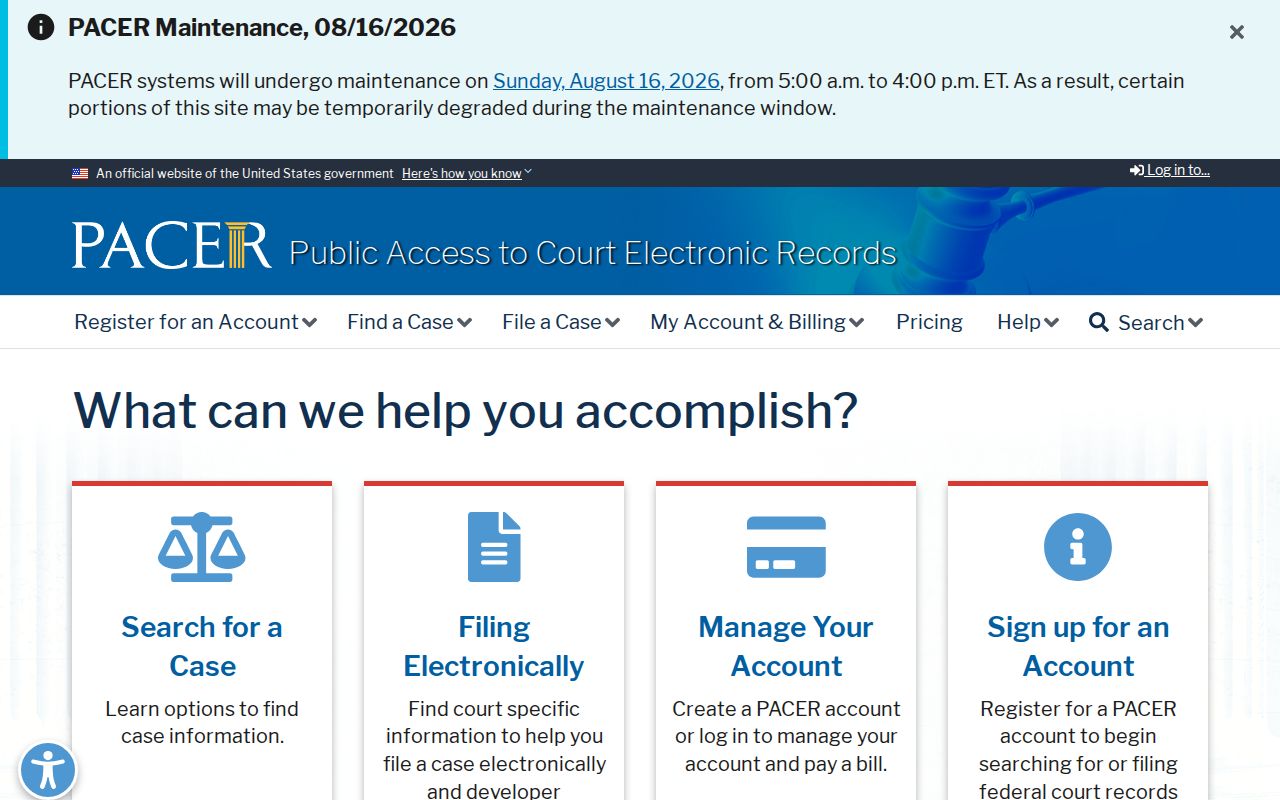
PACER can provide a federal case number, court, filing date, docket events, judge, counsel, judgments, and available filings, but it is not a police report or arrest database.
The Eastern District of Virginia is the federal trial court serving the jurisdiction.
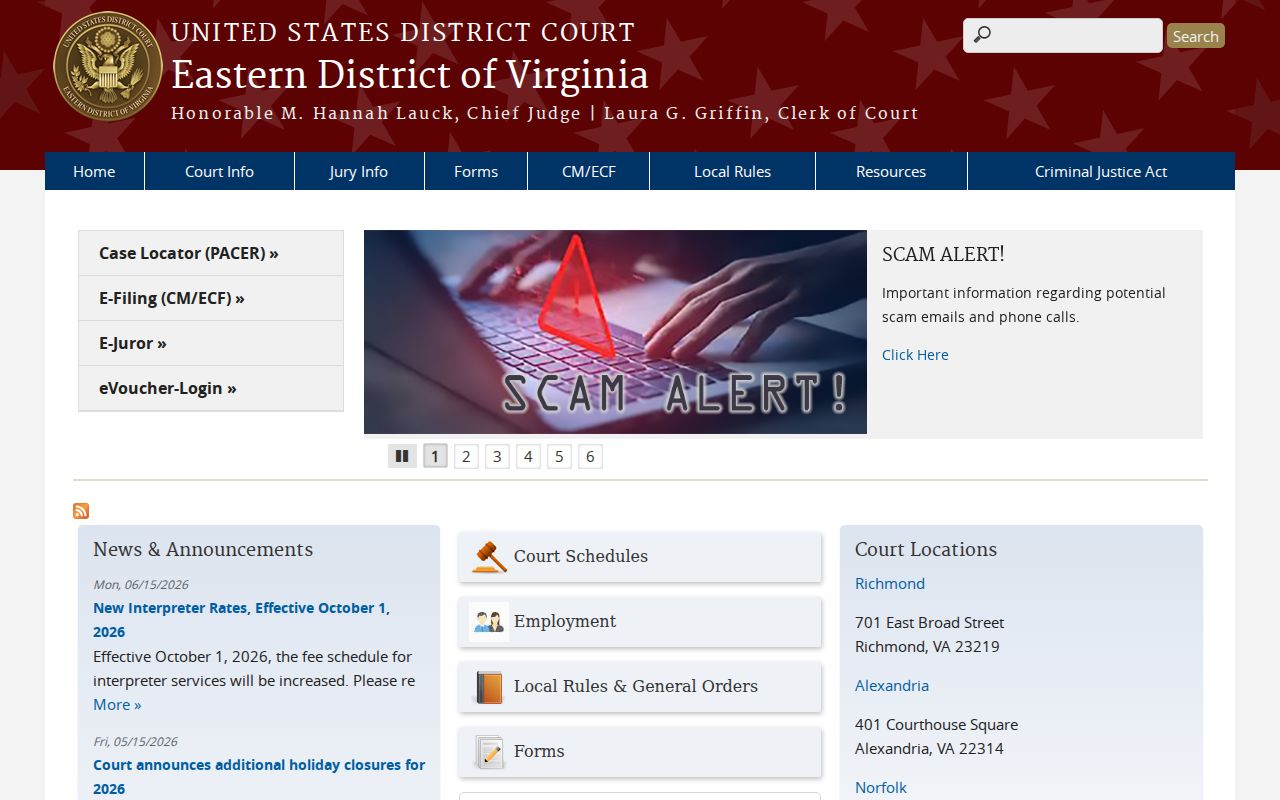
Use the federal court for its own docket, the Bureau of Prisons for federal custody, and local Chesapeake offices for the source incident or city booking.
Chesapeake Police Record Requests
A focused VFOIA request describes the record rather than asking the custodian to resolve a legal question. Include the report or incident number when known, a short date and time range, location, involved department, record type, and preferred delivery format. The city may need a requester’s name and legal address to assess Virginia-citizen or media rights. A reason for wanting the record is not required.
Chesapeake generally must respond within five working days by producing records, withholding material with a legal basis, explaining that records do not exist or belong elsewhere, or invoking seven additional working days. Reasonable charges may cover actual access, duplication, supply, or search work, and an estimate can be requested in advance. A “no responsive records” answer may mean the request reached the wrong custodian, not that an event never happened.
Note: Ask for segregable nonexempt portions when a Chesapeake police record contains both public and protected material.
Public Access Rules in Chesapeake
Virginia law starts from public access but preserves separate rules for police investigations, criminal-history dissemination, juveniles, victims, sealed files, and sensitive identifiers. Adult arrestee identity and the general nature of charges can be treated differently from an investigative narrative. Agencies may protect undercover methods, tactical details, victim or witness information, medical material, and content whose release could harm an investigation or safety.
Key Statutes:
Virginia Freedom of Information Act establishes the Commonwealth’s public-record framework and its exemptions.
Virginia Code § 2.2-3704 sets request and response procedures, including the ordinary five-working-day framework.
Virginia Code § 2.2-3706 governs access to law-enforcement and criminal incident information and permits stated protections.
Virginia Code § 19.2-389 limits dissemination of criminal-history record information to authorized recipients and purposes.
Court openness does not override juvenile confidentiality, sealing, expungement, protective orders, or redaction duties. When an online index is incomplete, ask the correct clerk whether a public source file exists and what copy or certification process applies.