
Chesapeake Criminal Court Cases
Chesapeake is an independent city, so there is no Chesapeake County court or county clerk. Its courts are part of Virginia's state judicial system. Chesapeake General District Court finally hears misdemeanors and traffic matters. It also conducts preliminary hearings in felony cases. If a felony is certified or indicted, the prosecution moves to Chesapeake Circuit Court and receives a Circuit Court file. A misdemeanor appealed from General District Court also creates a Circuit record because the appeal is heard again.
Chesapeake Juvenile and Domestic Relations District Court handles juvenile delinquency and certain family or adult criminal matters. Its public access rules are tighter. The Chesapeake Circuit Court clerk keeps felony, indictment, and appealed-case files, while the Chesapeake General District and J&DR clerks keep their own dockets. A person may therefore have linked Chesapeake criminal court cases under different case numbers. Search each likely Chesapeake court instead of treating one empty result as final.
Three Chesapeake Criminal Courts
The official General District Court contact page shows the local court that handles adult misdemeanors, traffic cases, and preliminary felony work.
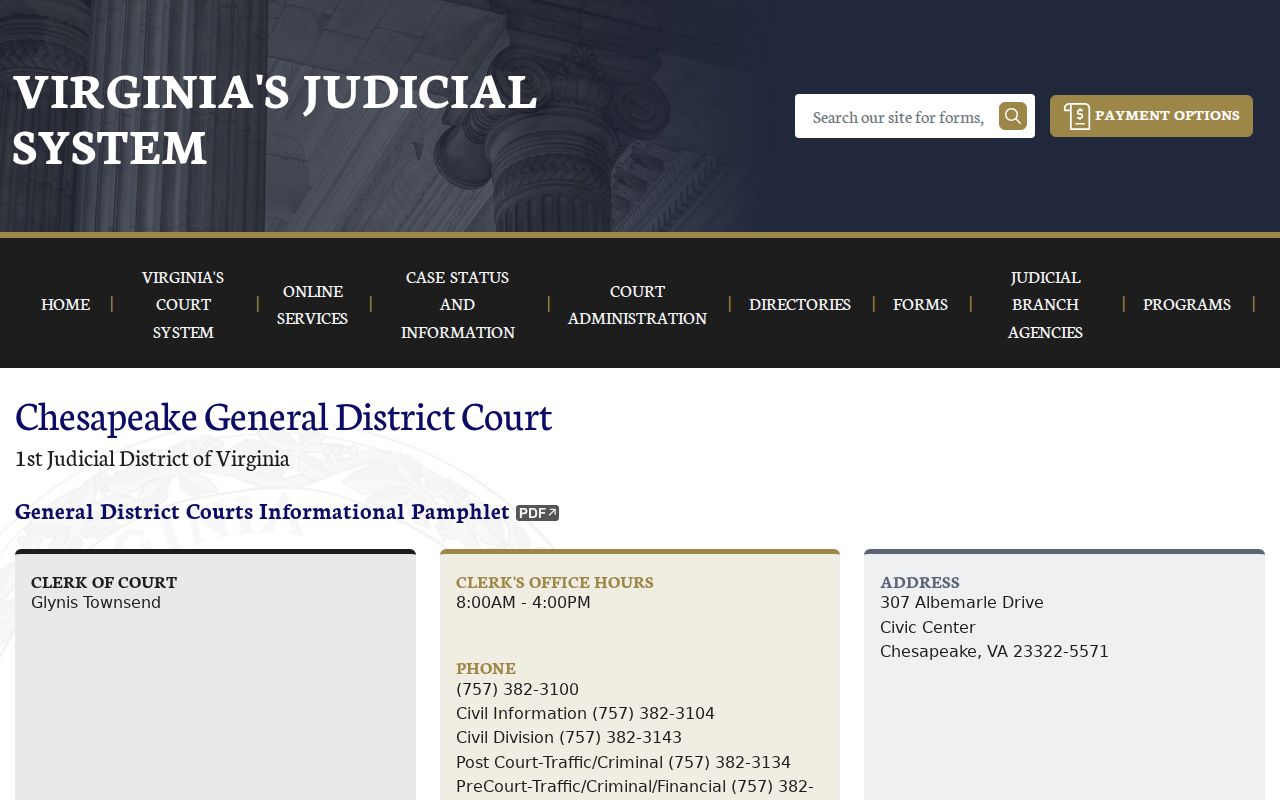
That court is often the first file to check after an adult charge, but it may not be the last. Felony cases can move to Circuit Court after certification or indictment. J&DR is different again. The official Chesapeake J&DR Court page identifies the separate clerk for that jurisdiction.
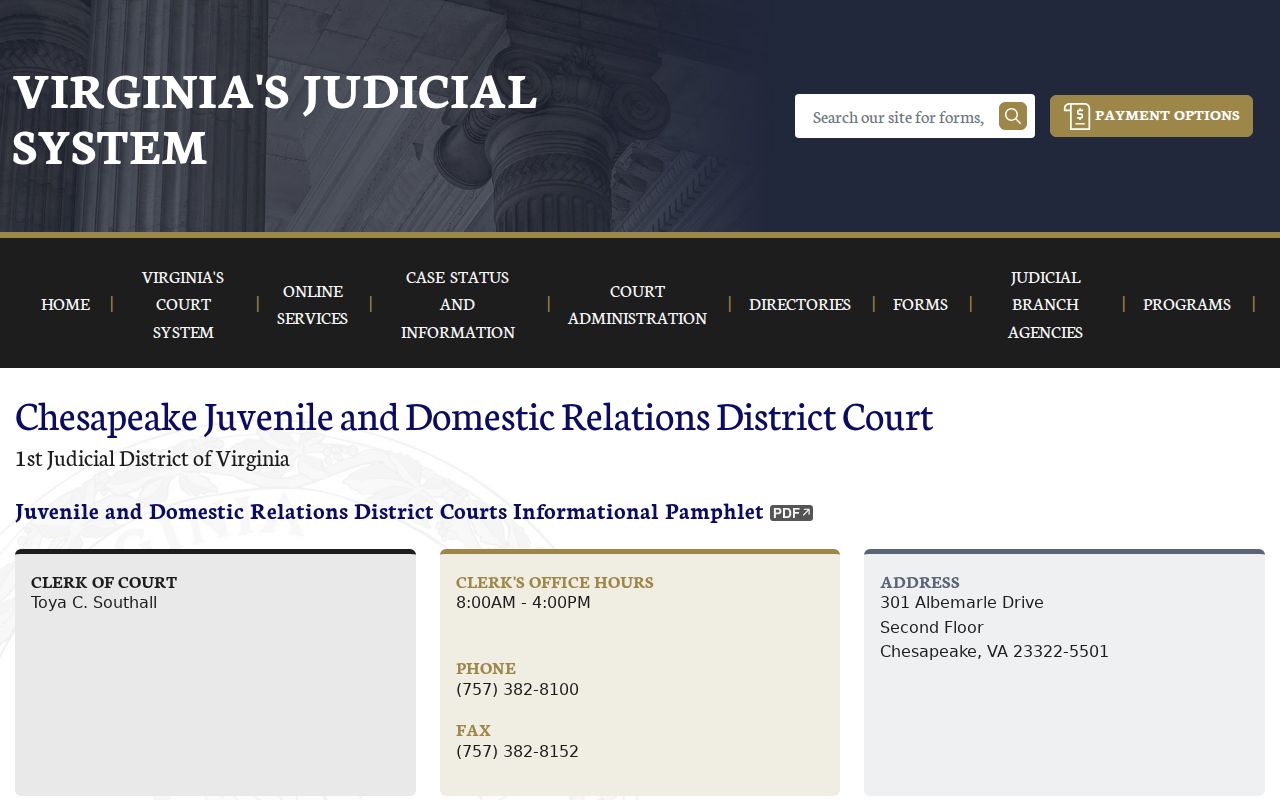
The J&DR image represents a real court channel, not a promise of open juvenile name searches. Virginia protects juvenile details from ordinary public internet access. Contact that clerk about lawful access to a case within its jurisdiction.
Searching Chesapeake Case Records
The Virginia Judiciary Case Status and Information hub routes users to court-specific systems. There is no single statewide Circuit Court index that searches every locality at once. Chesapeake participates in its own Circuit Case Information system. Use an exact Chesapeake case number when possible. For a name search, compare the Chesapeake court, charge, event dates, and other public identifiers before concluding that a result belongs to the person sought.
- Open the Judiciary case-information hub and choose General District or Circuit Court.
- Select Chesapeake as the court or locality, then choose the criminal or traffic division when offered.
- Search by the exact case number, or enter the available first and last name fields.
- Read the status, charge, hearing history, disposition, and court name as one record.
- Ask the correct clerk for the signed order, copies, or certification when the online entry is not enough.
| Field Label | Type | Required | Notes |
|---|---|---|---|
| Court | Locality selection | Yes | Choose Chesapeake General District Court |
| Division | Tab or control | Yes | Select criminal or traffic, not civil |
| Search By | Option | Yes | Name or case number, as offered |
| Name | Text | Conditional | Last and first name; confirm common-name matches |
| Case Number | Text | Conditional | The exact court number is the strongest key |
| Hearing Date | Date or docket route | No | Useful when checking a daily docket |
The official General District Court search interface shows the point where Chesapeake criminal case fields are entered.
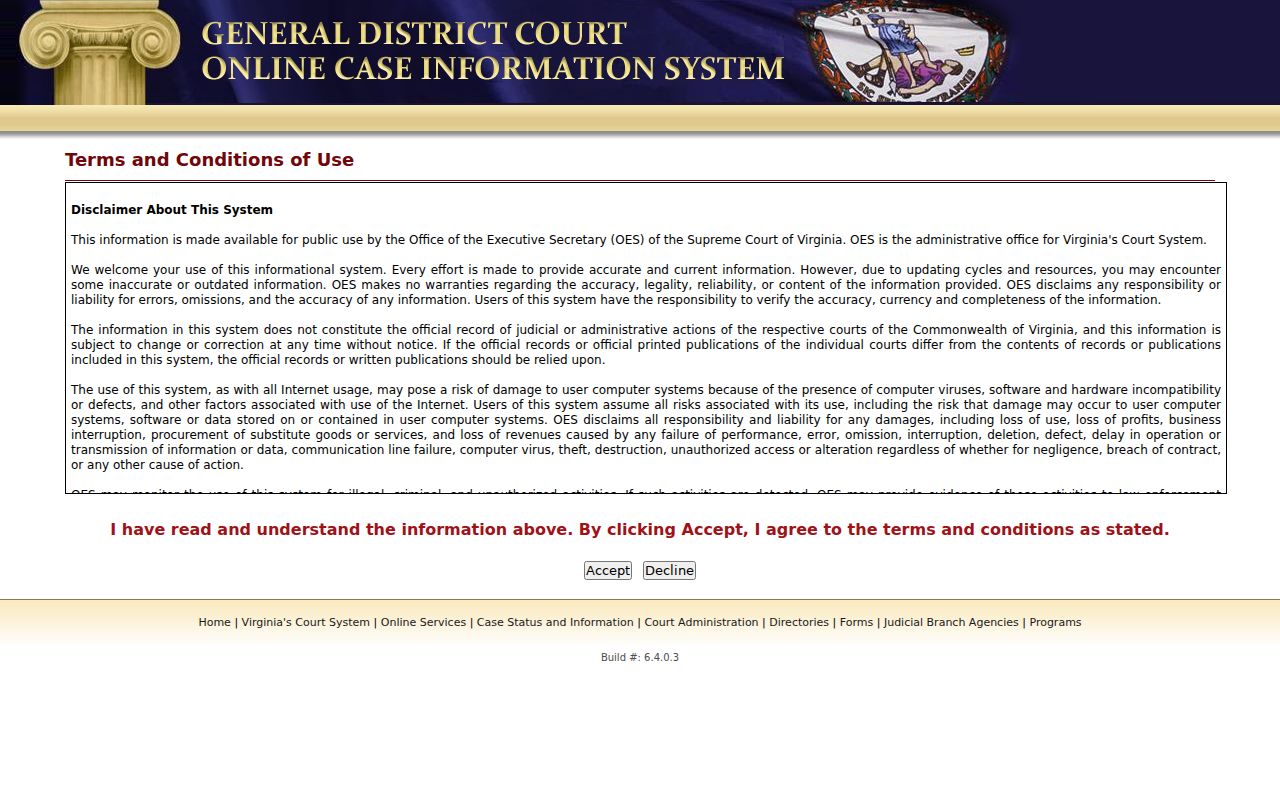
The Chesapeake search screen is an index and status aid. It does not mean every pleading, exhibit, or signed order can be downloaded.
Missing Chesapeake Court PDFs
An online Chesapeake docket can show a hearing or disposition without linking the source document. That is normal. Start by recording the full case number, court name, approximate year, and title of the item needed. Then contact the clerk that owns the file. State whether a plain copy will work or whether the Chesapeake criminal court record must be certified. A clerk-certified judgment carries a formal seal or certification; a screen capture does not.
The Circuit clerk's records counter is at 307 Albemarle Drive, Suite 300A, Chesapeake, VA 23322-5579. The phone is 757-382-3000, and public office hours are 8:30 a.m. to 3:45 p.m. The researched fee schedule states $0.50 per copied page and $2 for certification. Ask before ordering a large file. Older, archived, sealed, expunged, and protected records can require a different search or may not be released.
The official Circuit Court page is the source for the clerk's current location and schedule.
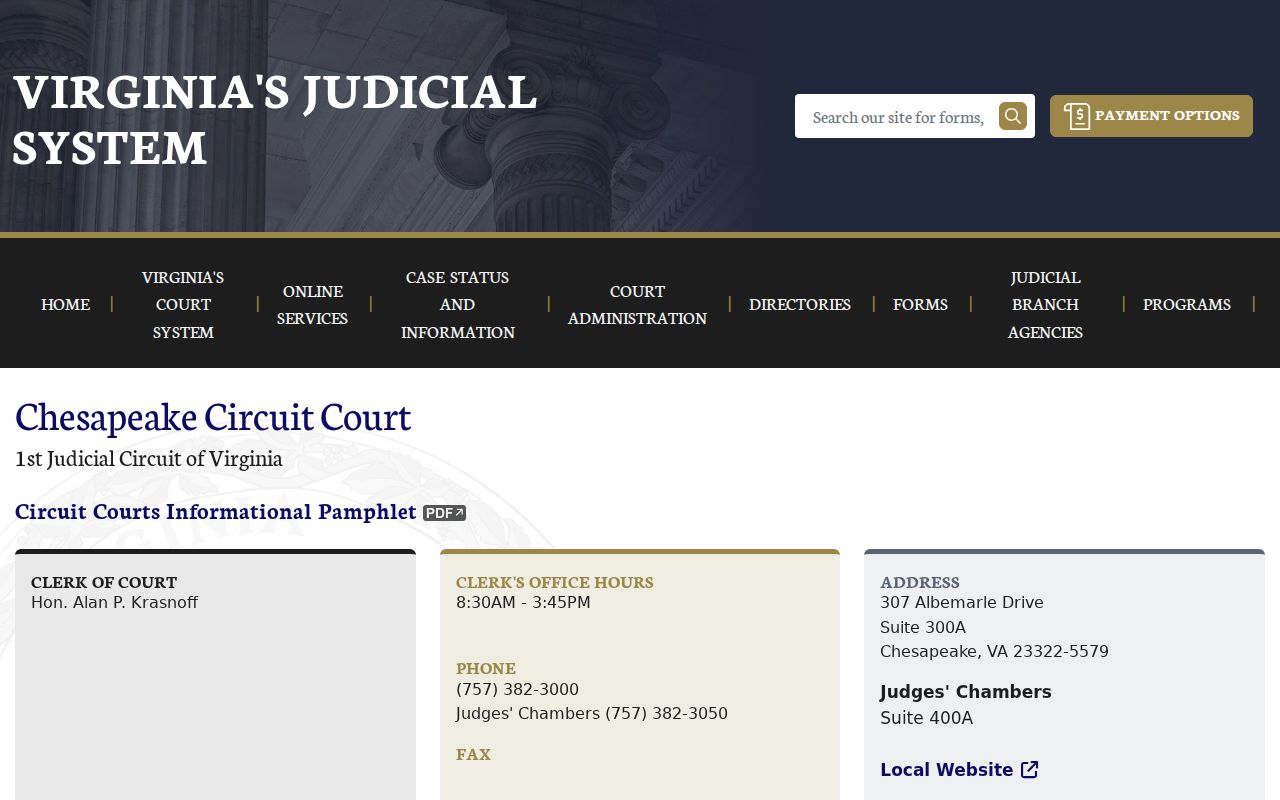
This clerk counter is the source for the official Chesapeake Circuit case file after an online search identifies the right matter.
Inside a Chesapeake Case File
A Chesapeake criminal case file documents the prosecution in that court. It may connect the charging paper to arraignment, motions, plea or trial events, judgment, and sentence. Online fields vary by court and by case. They can include a party display, charge description, offense or arrest date when entered, hearing type, courtroom, judge, counsel, status, plea, finding, and disposition. Financial fields may also appear. Protected identifiers and victim information do not belong in the public display.
| Case Number & Court | The court-specific key, locality, case type, and filing or start date. |
|---|---|
| Charging Document | The filed accusation and charge at that stage, which may later change. |
| Docket Entries | A dated event log for filings, hearings, continuances, and orders. |
| Hearing Dates | The time, type, courtroom, and judge when public and entered. |
| Disposition & Judgment | The outcome for each charge, with the disposition date and finding when shown. |
| Sentence & Conditions | Public sentence terms recorded by the court, which may include suspended time or probation. |
A Chesapeake court record differs from a CCRE criminal history. The case file follows one prosecution. A VSP repository product compiles reportable events under separate dissemination rules. For a wider view of how those Chesapeake sources connect, use the Chesapeake criminal history overview.
Reading Chesapeake Case Outcomes
Docket terms deserve care. A status of pending means the charge is unresolved, not that guilt has been found. Nolle prosequi means the prosecution discontinued that charge. It is not the same as an acquittal, and it does not erase the arrest. Dismissed also describes a case outcome, not automatic removal from all police, booking, or repository records. An appeal from General District Court can create a fresh Circuit file and case number.
- Pending
- The Chesapeake criminal case has not reached a final outcome.
- Nolle prosequi
- The prosecution chose not to continue that charge at that point.
- Dismissed
- The charge ended without a conviction, but other source records may remain.
- Acquitted
- The judge or jury returned a not-guilty result after adjudication.
- Capias
- Court process directing arrest or appearance; confirm it safely with the clerk or law enforcement.
When an entry appears wrong or lacks the final result, obtain the certified disposition from the Chesapeake clerk that entered it. Keep that paper while asking the originating agency or VSP CCRE to review a related repository record.
How a Criminal Case Moves
A Chesapeake felony can begin in General District Court and later continue in Circuit Court. That shift is why a single portal result may tell only part of the story. The prosecutor files or proceeds on a charge, the accused is arraigned, pretrial hearings and motions follow, and the matter ends by plea, trial, dismissal, or another lawful disposition. Sentencing follows a conviction. Research did not establish a fixed local duration for each step, so no uniform timetable should be assumed.
Case flow: Charges Filed › Arraignment › Pretrial › Plea or Trial › Disposition › Sentencing
Chesapeake criminal terms begin on the first Tuesday of each month, with the grand jury sitting on the first day of term. Election and holiday schedules can alter that pattern. General District felony entries and later Circuit entries should be read as linked stages only after the names, dates, charges, and case references align.
Chesapeake Prosecutor Is Not Clerk
The Chesapeake Commonwealth's Attorney prosecutes city felonies across General District, J&DR, and Circuit courts, as well as selected misdemeanors and misdemeanor appeals. The office also handles expungement hearings and other assigned matters. It does not serve as the neutral custodian for public case-file copies. Ask the appropriate clerk for docket papers and signed orders.
The official Commonwealth's Attorney page explains the prosecutor's Chesapeake criminal court role.
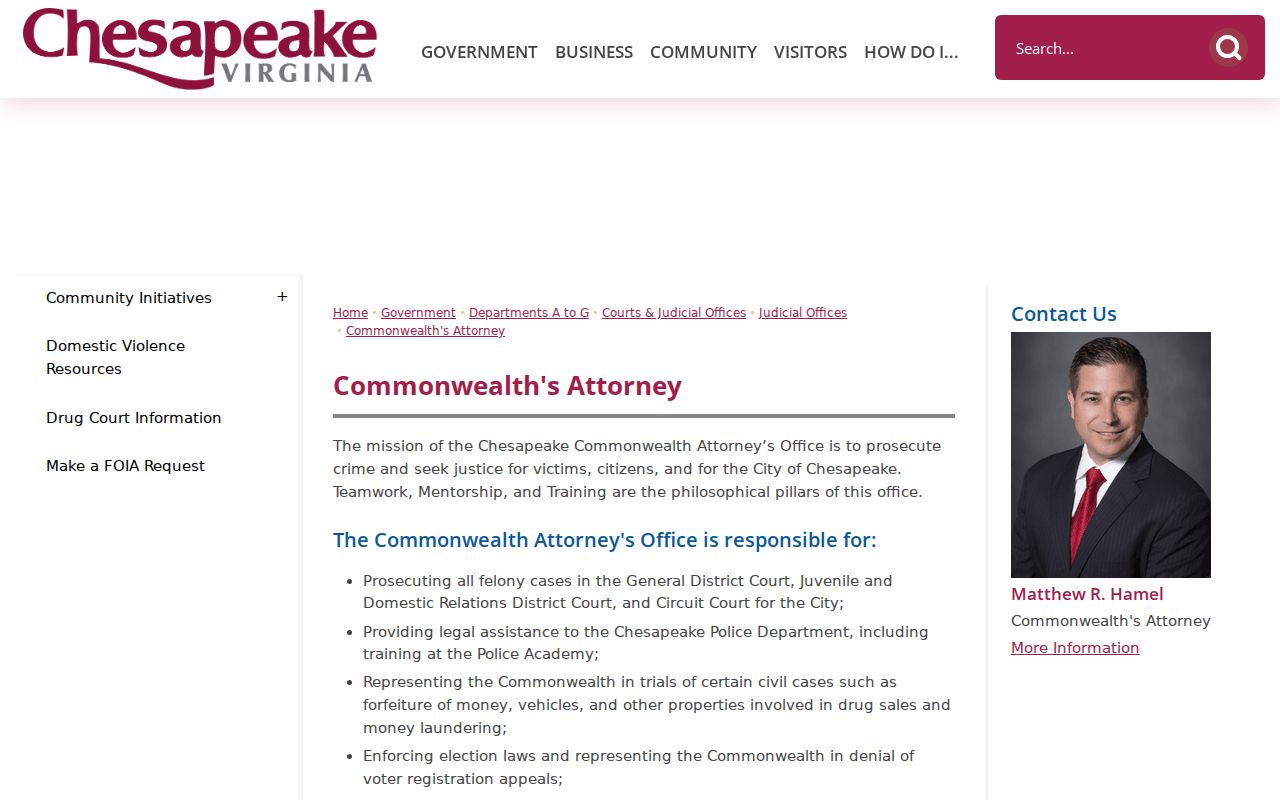
That division matters when seeking help. The prosecutor represents the Commonwealth. The Public Defender represents qualifying accused people through court appointment. Neither office replaces the clerk's criminal records counter.
Expunging Chesapeake Court Records
Virginia expungement under Code §19.2-392.2 chiefly applies to qualifying charges that ended in acquittal, nolle prosequi, dismissal in covered circumstances, or an absolute pardon for unjust conviction. It is not a general erase-any-conviction process. A qualifying Chesapeake petition is filed in Chesapeake Circuit Court, the jurisdiction where the charge was disposed. Accurate charge, court, and disposition details are vital.
Fingerprints and a criminal-history report form part of statutory processing, and the Commonwealth's Attorney may respond. Virginia's newer sealing chapter has distinct limits and phased rules. Check the current statutes and Judiciary forms before filing. Do not assume that an empty online Chesapeake case search proves a sealing order was entered, or that a favorable outcome removed every independently held record.
Case Record Access & Restrictions
Virginia court openness does not make every Chesapeake criminal court detail public. Juvenile information, sealed and expunged records, protected victim data, personal identifiers, and material covered by other court orders can be withheld or redacted. J&DR public internet access is especially limited. Even an adult online case view may omit the document text and show only index fields.
When a Chesapeake case is absent, first verify the court level and case number. Then ask the clerk whether the record is older, archived, restricted, or held by another court. A request under the Virginia Freedom of Information Act is not a way around court confidentiality or sealing law. Ask for a legal basis when material is withheld and for any segregable public portion that can lawfully be released.
Note: A court-search miss can reflect the wrong Chesapeake court, a later case number, restricted access, or an indexing delay.