
Checking Chesapeake Criminal History
No single Chesapeake search produces a full local and state history. Choose the source by event. Citizen Connect supplies selected police incident context, the sheriff's inquiry shows current local custody, and the Virginia Judiciary systems show filed cases. The Virginia State Police name check is a separate mailed conviction search. Each source has a different update cycle and legal scope.
Gather the full name, likely spelling variants, an approximate date, and a case or report number when one is known. A date of birth helps distinguish people, though public court results may hide part of it. Match the court, charge, event date, and case number before treating two entries as one person.
- Identify whether the event is a police report, booking, court case, state conviction, prison record, or registry entry.
- Search the matching official local or state channel and select Chesapeake as the court or independent city.
- Compare more than a name. Use dates, case numbers, court level, and charge details that the system lawfully shows.
- Retrieve the source file from CPD, the sheriff, or the correct court clerk when the online result lacks the signed order or narrative.
- Order a certified court copy or an official VSP check when an informational screen is not enough for the reader's own needs.
The Virginia Judiciary case information page shows which court search to open for Chesapeake criminal cases.
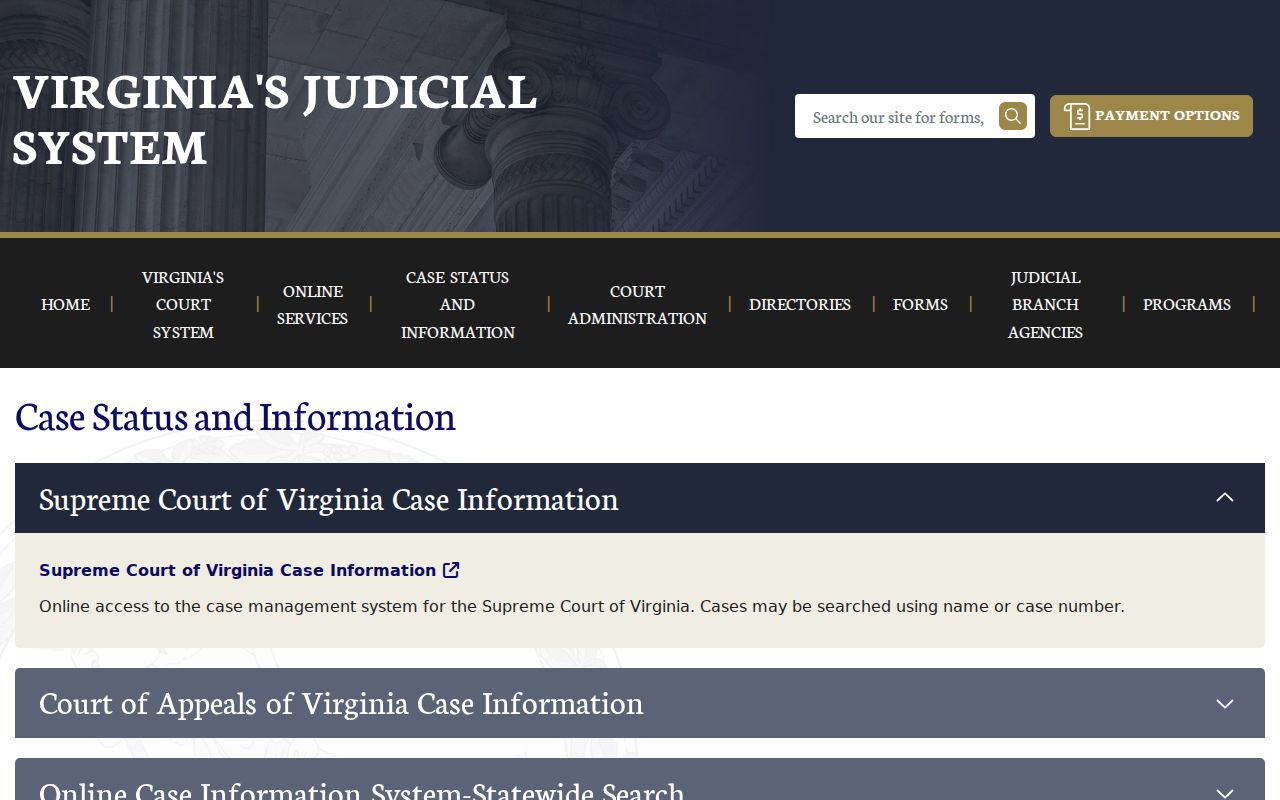
The court screen is an index and status aid. Signed orders and certified Chesapeake records still come from the clerk that holds the file.
| Search control | How it helps | Chesapeake use |
|---|---|---|
| Court or locality | Sets the record source | Select Chesapeake General District or Circuit Court |
| Name | Finds public party matches | Use first and last name with care |
| Case number | Targets one court file | Use the exact court-assigned identifier |
| Hearing date | Opens date-based docket views | Useful when the precise case number is unknown |
Four Chesapeake Criminal Record Counters
The municipal center puts several record offices close together, but their files do not merge. CPD Central Records at 304 Albemarle Drive handles police reports and police FOIA requests. The Circuit Court Clerk at 307 Albemarle Drive, Suite 300A keeps felony, indictment, and appealed misdemeanor files. General District Court handles misdemeanor, traffic, and preliminary felony records. The Chesapeake Sheriff manages booking, local custody, and inmate information.
Going to the wrong counter can yield a correct response that still misses the needed record. A police report does not establish the disposition. A court docket does not contain all investigative material. The sheriff's live custody screen is not a historical conviction index.
CPD Central Records
304 Albemarle Drive
Chesapeake, VA 23322
757-382-6387
Circuit Court Clerk
307 Albemarle Drive, Suite 300A
Chesapeake, VA 23322
757-382-3000
8:30 a.m. to 3:45 p.m.
Chesapeake Sheriff
401 Albemarle Drive
Chesapeake, VA 23322
757-382-6159
VADOC District 31
808 Live Oak Drive, Suite 125
Chesapeake, VA 23320
757-424-6760
The official Chesapeake government site anchors local office and service information.

Use that city source to confirm current contacts before a trip, especially when security, hours, or entry rules may change.
Virginia Official Background Checks
The Virginia State Police criminal background program routes the general public to SP-167. It is a name-based Virginia conviction search from the Central Criminal Records Exchange, not an instant web result and not the same as a Chesapeake court search. The subject signs the affidavit and has it notarized. When results are sent to another recipient, the current instructions may also require that recipient's representative to sign and notarize the form.
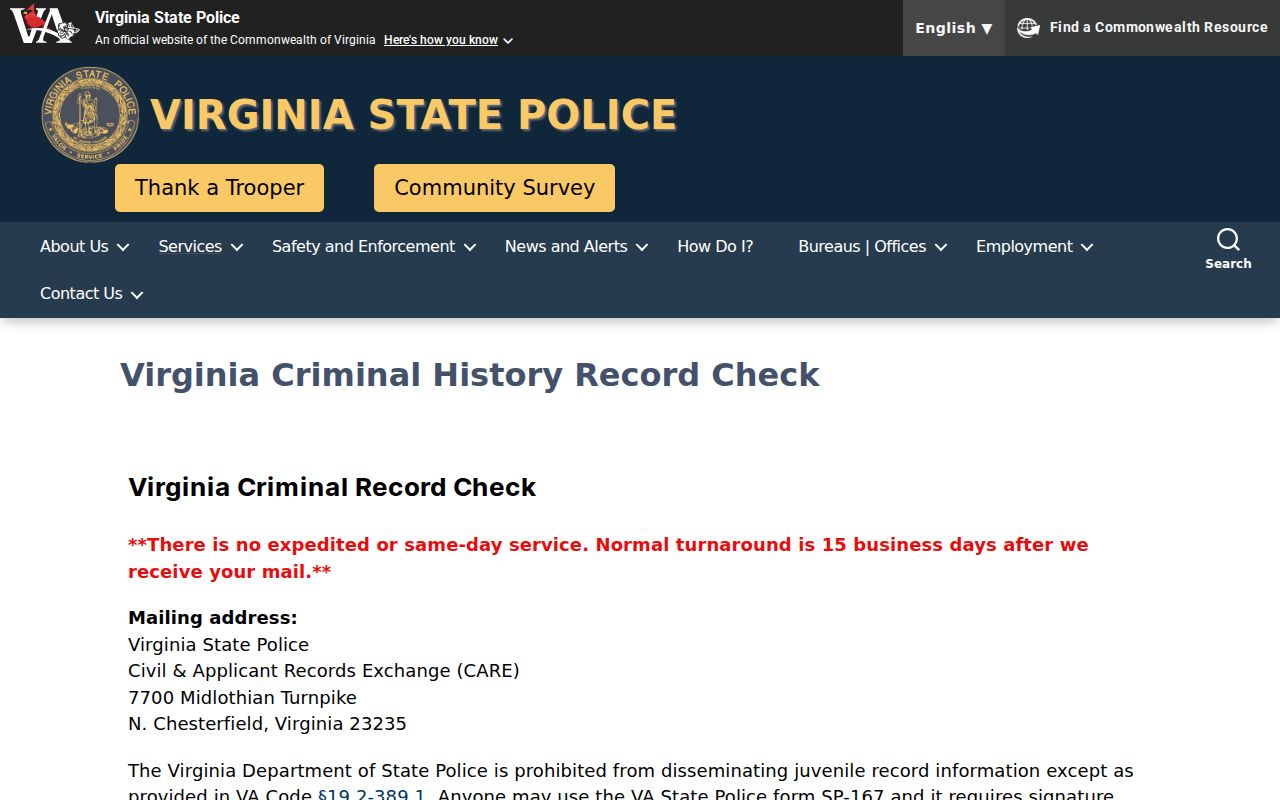
The official instructions state an approximate 15-business-day turnaround after mail receipt and say there is no same-day or expedited service.
A voluntary fingerprint card is different. Virginia law allows law-enforcement agencies to take prints using SP-126, with a maximum charge of $10 for the first set and $5 for more sets. Statutorily authorized state and FBI checks follow their own agency process. They are not a walk-in public name search.
Chesapeake SP-167 Record Requests
The VSP form generator collects a request type and purpose, the subject's name and identifying details, the reply address, contact information, and payment details. It creates the form for printing, signatures, notarization, and mail. The current VSP example lists $15 for a criminal-history search and $20 for a combined criminal-history and sex-offender search. Confirm the amount on the form generated on the day of the request.
| Official request | Current listed amount | Key limit |
|---|---|---|
| SP-167 criminal history | $15 | Name-based Virginia conviction result |
| SP-167 combined search | $20 | Adds Virginia registry check |
| Voluntary fingerprint set | Up to $10 first, $5 more | Print capture is not the record search itself |
| Specified state and FBI check | $27 total | Only through an authorized statutory process |
VSP's criminal history and fingerprint forms library is the source for the current SP-167 and SP-126 materials.
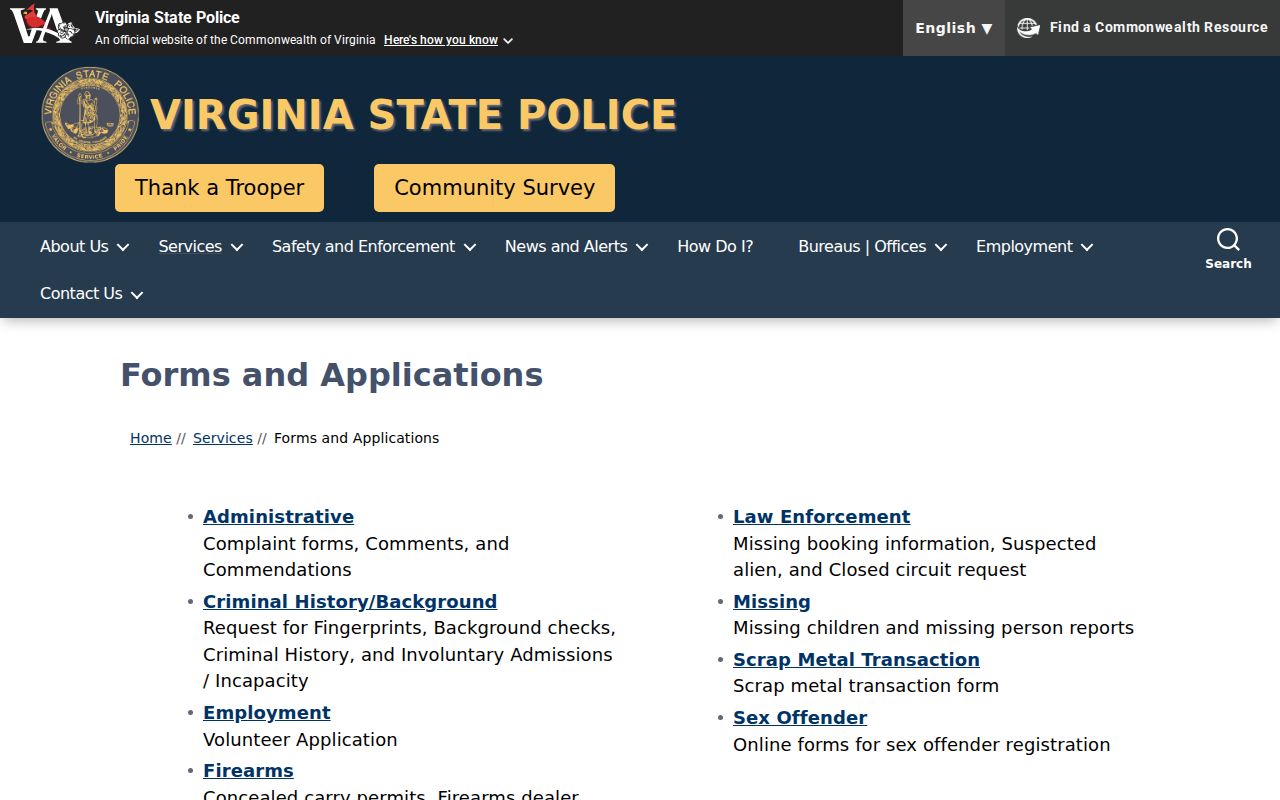
The forms page helps prevent use of a stale copy or an outdated payment instruction.
Chesapeake Criminal Record Types
A record's label signals its source and limits. CPD may create an incident report without making an arrest. The sheriff creates a booking file when a person enters local custody. A court clerk records charges, hearings, and outcomes. VSP receives fingerprint-supported arrest and disposition reporting for CCRE, while VADOC maintains state prison and supervision information.
- Incident report: a CPD account of a reported event and investigation, which may exist without an arrest.
- Booking record: a local custody entry showing an accusation and release terms, not a finding of guilt.
- Court case file: the charge, hearing history, orders, plea or finding, disposition, and sentence held by the proper clerk.
- CCRE history: a state repository product whose public name-search version focuses on Virginia conviction data.
- Custody or registry record: a separate VADOC, local jail, or VSP registry record built for a distinct legal purpose.
Warrants are another separate record. Chesapeake has no verified public citywide warrant-name database. A person checking their own status can call CPD's Warrant Unit at 757-382-6388 or 757-382-6389 and follow safe instructions.
One Chesapeake Arrest, Three Records
A CPD arrest can produce a police record, a sheriff booking record, and a court file. Fingerprints and later dispositions may also reach CCRE. These files are related, yet each answers a different question. Citizen Connect describes selected reported events and may change after review. The sheriff's inquiry tracks current or recent local custody. General District or Circuit Court shows what was filed and how that court resolved it.
Record flow: CPD incident or arrest › Sheriff booking › General District preliminary or misdemeanor case › Circuit felony or appeal file › CCRE disposition update.
Not every event reaches every step. A report may end without arrest. A summons may not produce a jail booking. A felony can move from General District to Circuit under a new case number. Reporting lag can leave a disposition missing from the state history for a time.
For deeper treatment of the accusation and booking stage, use the Chesapeake arrest lookup. The outcome belongs in the court record, not in the arrest entry.
Inside a Chesapeake Criminal Record
A fingerprint-supported criminal history may group data into arrest cycles, including the contributing agency, arrest date, charges, statutes, court disposition, sentence, and state or FBI identifiers. Public court sites show fewer personal identifiers. Their case number, court, charge, hearing, status, and disposition fields are often the best bridge to the source file.
| Name and identifiers | Legal name, aliases, and limited descriptors; sensitive identifiers may be hidden from public screens. |
|---|---|
| Arrest and booking data | Arresting agency, arrest or booking date, local number, charge, bond, and time-sensitive custody status. |
| Charges and statutes | Alleged offense wording and code citation, which may change as a prosecutor reviews the case. |
| Disposition | Pending, dismissed, nolle prosequi, acquitted, guilty, or another court result with its date. |
| Sentence | Confinement, suspended time, fines, or supervision where public and entered. |
| Custody or supervision | Local jail, state custody, or court-ordered supervision status, held in separate systems. |
A blank field has no one fixed meaning. It can reflect redaction, lack of online coverage, a reporting delay, or an event that never belonged in that product.
Chesapeake Criminal Custody Layers
The Chesapeake Correctional Center is a sheriff-operated local jail. Search its New World inquiry for current local custody. The VADOC Inmate Locator covers state custody and should not be used as a substitute for the city jail roster.
Two VADOC facilities sit on Sanderson Road in Chesapeake: Indian Creek Correctional Center and St. Brides Correctional Center. They are state prisons, not wings of the Chesapeake jail. A federal sentence belongs in the Bureau of Prisons locator. Someone may vanish from a local jail screen because of release or transfer, not because all earlier records disappeared.
Note: Search local jail, state prison, and federal custody systems separately because no one locator covers all three.
Public Access Laws in Virginia
The Virginia Freedom of Information Act creates a right to request qualifying public records, but specific criminal-record laws and exemptions still control disclosure. Court openness also does not erase juvenile confidentiality, sealing orders, victim protections, or redaction duties. Ask for a releasable portion and a cited legal basis when an agency withholds part of a record.
Key Virginia statutes:
Code § 2.2-3704 sets the ordinary five-working-day response framework and available response types.
Code § 2.2-3706 governs law-enforcement records and permits specified safety, victim, and investigative protections.
Code § 19.2-389 limits dissemination of criminal-history record information.
Code § 19.2-392.2 supplies the classic expungement route for qualifying case outcomes.
Chesapeake Criminal Record FOIA Routes
Send a request to the custodian, not simply to city hall. CPD Central Records handles police material. The sheriff holds booking and inmate records. Court files come from the relevant clerk under court access rules. A useful request names the incident or case number, date range, location, department, record type, and desired form of delivery.
Under the city framework, the office generally responds within five working days by producing the record, citing a basis to withhold it, explaining that it does not hold the file, or invoking seven more working days. That is a response deadline, not a promise that every item will be released. Reasonable charges may cover actual access, copying, and search work, so ask for an estimate before a broad video or dispatch request.
The Chesapeake VFOIA page routes requests by department. A result of no responsive records can mean the wrong custodian was asked or protected material could not be released.
Sealed, Expunged, and Restricted Records
Virginia's classic expungement statute mainly covers charges that ended in acquittal, nolle prosequi, qualifying dismissal, or an absolute pardon for unjust conviction. A qualifying Chesapeake petition belongs in Circuit Court, where the charge was resolved. Statutory processing includes fingerprints and criminal-history review, and the Commonwealth's Attorney may respond.
The newer Virginia sealing chapter has automatic and petition-based paths, exclusions, limits, and phased effective provisions. Check the current statute and Judiciary forms instead of relying on an old summary. Juvenile cases and protected J&DR information also have rules that differ from ordinary adult court access.
The official Virginia expungement statute supplies the controlling eligibility language.
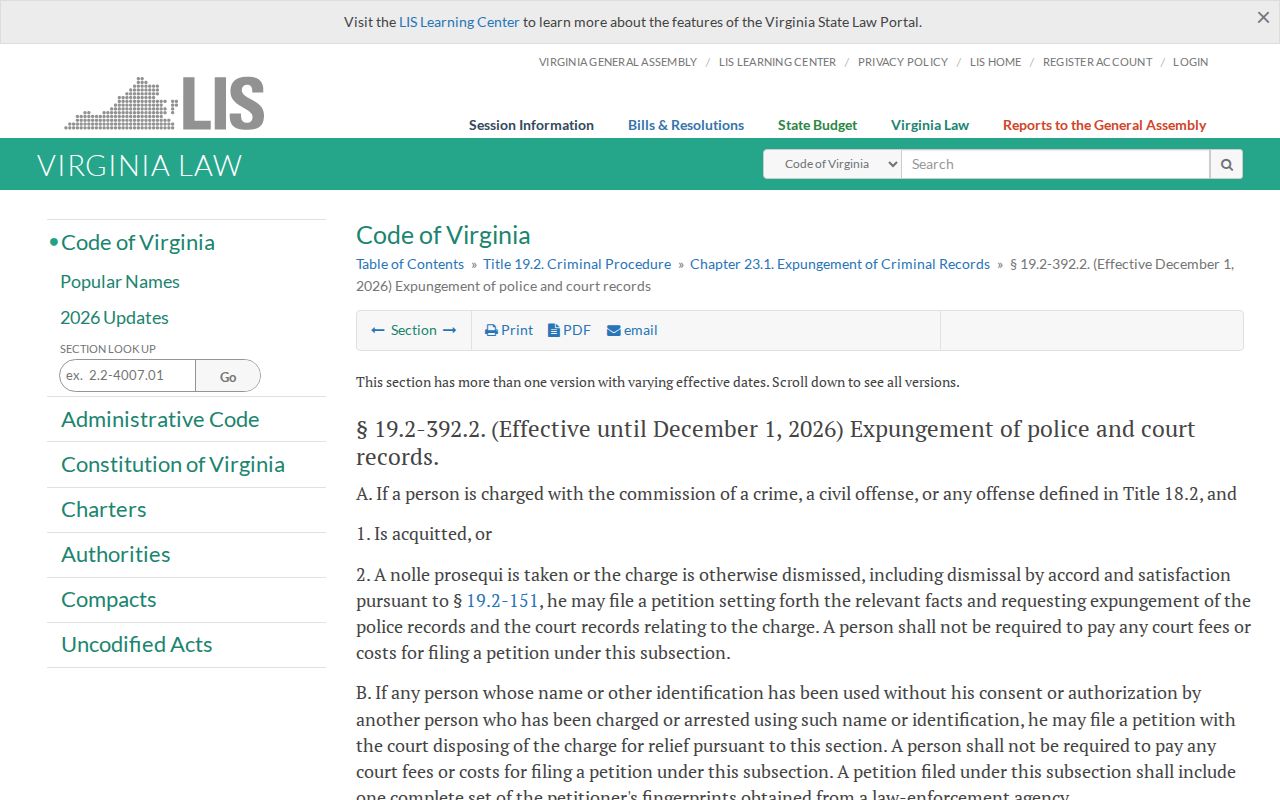
A court order can restrict official records, but it does not necessarily remove every independently held item or permit denial in every setting.
Chesapeake Criminal Supervision Records
Adult state probation and parole supervision for Chesapeake runs through VADOC District 31 at 808 Live Oak Drive, Suite 125. The office can confirm routing, but public staff should not be expected to release private case plans, treatment data, residence details, or protected information about another person. A court docket may show that probation was ordered without displaying its full conditions.
The VADOC facilities and offices directory lists the Chesapeake supervision office.
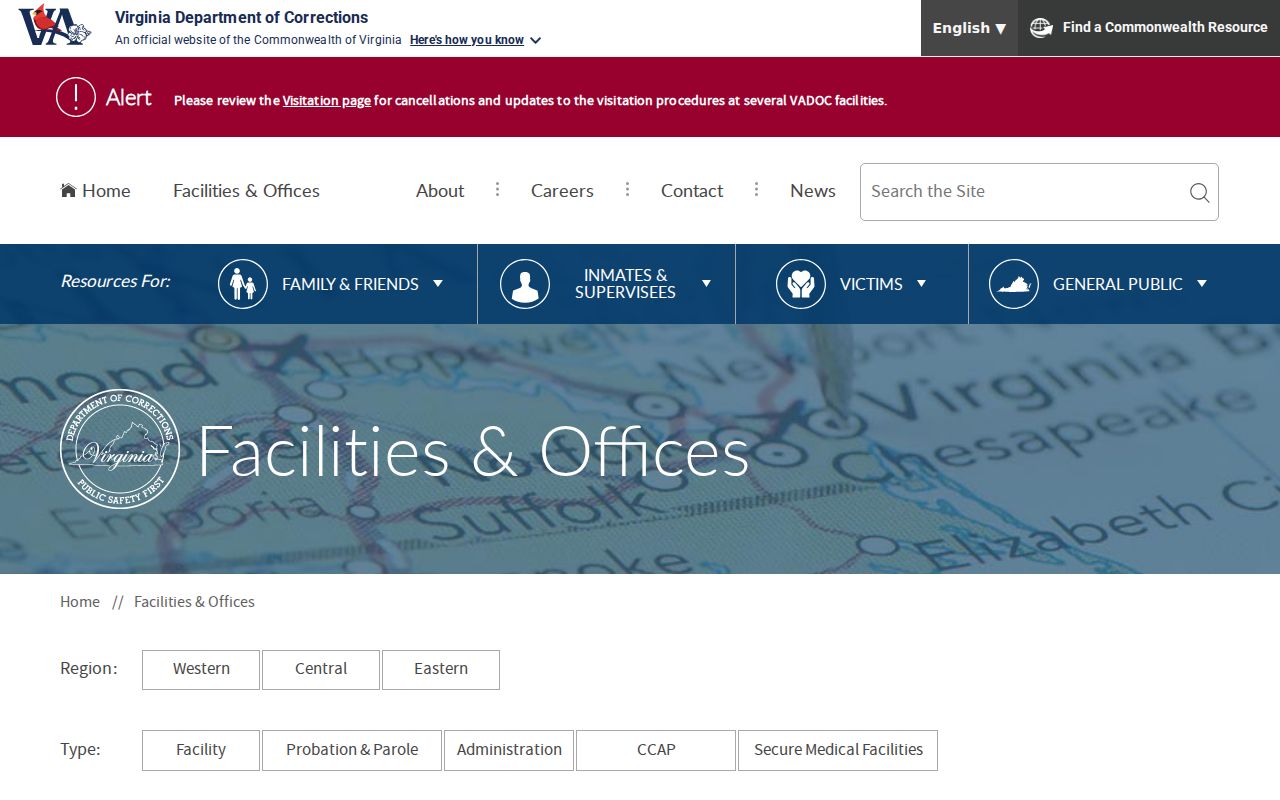
The directory separates community supervision from the city jail and from Chesapeake court records.
Parole decisions are made within the authority of the Virginia Parole Board, while VADOC performs field supervision. The Virginia Parole Board site describes that state role.
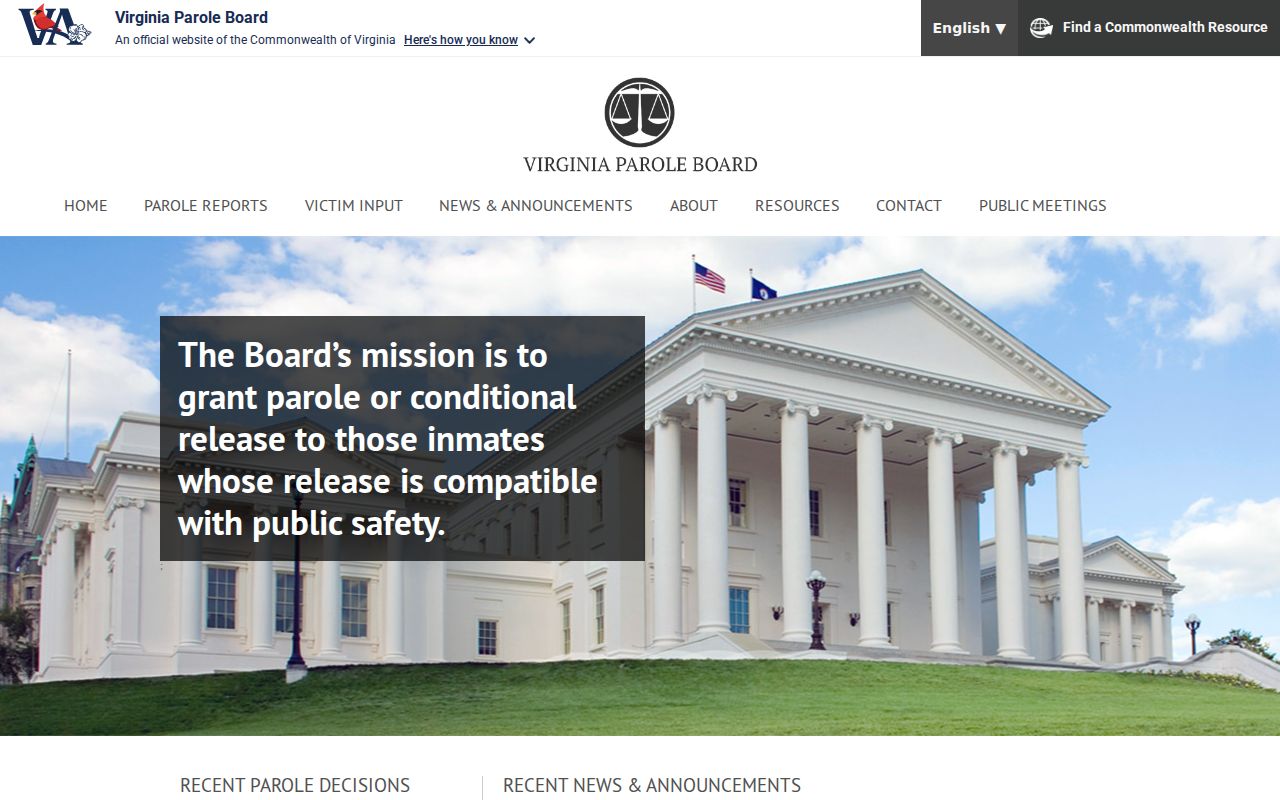
Local pretrial programs and juvenile Court Service Unit supervision are separate again, so the word probation does not identify one universal public file.
Chesapeake Criminal Records Since 1963
Chesapeake became an independent city when South Norfolk and Norfolk County consolidated on January 2, 1963. That history explains why the city performs county-like functions through constitutional officers and Virginia state courts. It also explains why a search for a Chesapeake County clerk points in the wrong direction.
The city spans Great Bridge, South Norfolk, Deep Creek, Western Branch, Greenbrier, Hickory, and rural land near the Great Dismal Swamp. A citywide incident search therefore works best with a date, street, report number, beat, or court identifier. Assuming every record arose near one downtown core can lead to bad matches.
For older material, give the clerk or records unit an approximate year and enough location detail to account for the jurisdiction's history. A live map is not an archive, and its changing entries should not be treated as fixed annual totals.
Federal Checks Beyond Chesapeake Records
A Chesapeake or Virginia search cannot reveal every out-of-state or federal event. A person reviewing their own nationwide fingerprint history can use the FBI Identity History Summary process. It is separate from a public people search, a city court query, and the VSP SP-167 name check.
The FBI Electronic Departmental Order portal begins the official electronic request workflow.
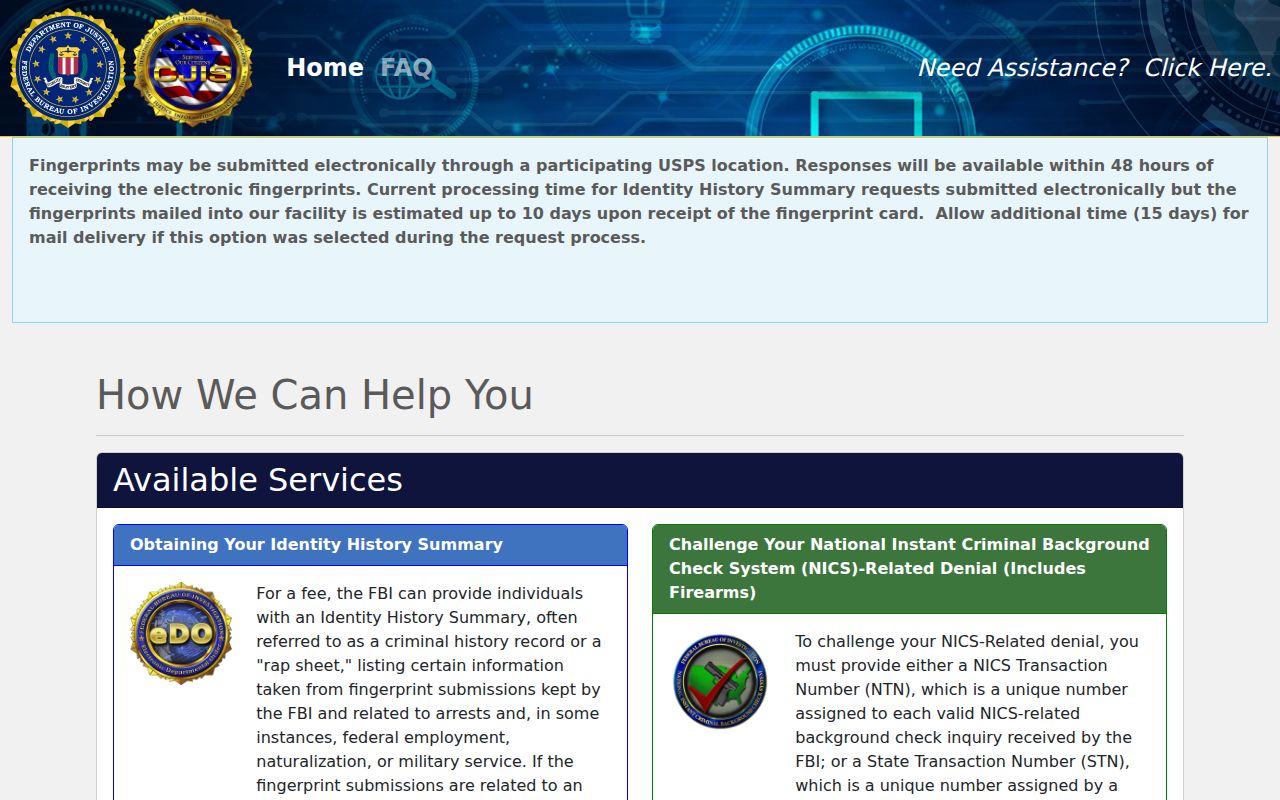
Preserve the FBI response and use its challenge route when an entry appears to belong to someone else or lacks a final disposition.
Federal court cases arising in Chesapeake fall within the Eastern District of Virginia and can be researched through PACER. Federal custody uses the Bureau of Prisons locator. Neither channel replaces local CPD, sheriff, or Virginia court sources.
Chesapeake Criminal Case Diversion
Chesapeake Drug Court supplies local context for how some case records develop. The official city process describes defense referral, Commonwealth's Attorney screening, a behavioral-health assessment, probation review of residence, and admission through a plea agreement. Graduation can suspend the hanging jail sentence and end supervised probation, while an unsuccessful discharge leads to sentencing within the agreed guideline range.
Participation and outcome are case-specific. A short docket label does not prove why someone was admitted, what treatment occurred, or whether graduation followed. The clerk's signed orders remain the reliable source for the public case outcome.
City annual reporting also describes crisis-response work involving behavioral health, the prosecutor, magistrate, and public defender. That system aims to steer some crises toward care, but it does not guarantee diversion in an individual Chesapeake criminal case.
Chesapeake Criminal Records by City
Chesapeake is itself an independent city and Census county-equivalent. It contains no incorporated cities to rank beneath it, so three separate municipal profiles would invent jurisdictions that do not exist. The one local profile follows CPD reports, sheriff bookings, state trial-court records, and Virginia repository reporting at the proper city level.
Chesapeake Criminal Records
Independent city and county-equivalent · CPD, Sheriff, and Virginia court channels
That structure preserves the real Chesapeake government map instead of treating neighborhoods such as Great Bridge or Deep Creek as separate cities.